Wednesday, November 10, 2010

Week 12

FRAUD AND FORGERY WITH CASH AND CHEQUES -

Frank Abagnale

A design innovation today, that has helped in the making of history would be the designs placed on cash and cheques in order to avoid forgery and fraud. By placing watermarks.


http://www.getentrepreneurial.com/images/cash-loan.jpg

History

Frank Abagbale, played a significant role in history, making it harder to use forgery and fraud to get money. In the 1960’s, at the age of 16, Frank Abagnale was able to cheat the cheques system. Frank would gain profit by printing out his account number onto a blank deposit slip and adding them to the real one. By doing so, he was able to collect $40,000 but as soon as the bank was able to tell it was a fake as the cheques kept bouncing, he would soon after change his identity. From identities as a school teacher, to a pediatrician and even a lawyer, Frank would keep changing his identities in order to forge his way around. It took a long time to catch him but after several years, Frank was then hired by the FBI in order to help prevent fraud and theft with cash and cheques. He was able to create special markings such as water marks, which are hidden on cheques and cash which can be revealed through LED lighting. Frank Abagnale became really big in the fraud company. Soon having a film biography on his story called “Catch me if you can” with Leonardo Di Caprio.

Culture

· People are getting smarter on forging. Always finding new ways or loops in creating ways to cheat the cheque system. It is harder to carbon copy them

.

http://thecia.com.au/reviews/c/images/catch-me-if-you-can-poster-1.jpg


Technological changes

· Technology advances so people are able to find their way around and find solutions in fraud and forgery.There are more advanced technologies that are able to find whether cheques and cash are fake or not. Machines and lighting have been created in order to scan and identify whether cash or cheques are real.

Political

· By cheating the system, everyone, including the politicians were affected. Money escaping under their noses. This made them begin to wonder, that if a 16 year old boy was table to cheat the cheque system, other criminals were able to do the same and there would be a greater loss in money.

Social

· Using scam, individuals may loose a large amount of moneys. The largest amount lost to an individual would be $5,000

· Frank Abagnale wasn’t just scamming cheques but also pretended to be of different people, like doctors, lawyers. This shows how cheques and cash could be stolen through fraud and forgery as people may steal the identity of you and be able to take money out in your name.

http://www.chasingthefrog.com/reelfaces/catchmeifyoucan/frank.jpg

Economic

Because of fake cheques and cash being used, people would loose a large sum of money.The economy could loose billions of money due to fraud. People from other countries could steal money and not be caught because of diplomatic immunity or being able to escape to from idenity fraud in another country. In both cases, there would be a great loss in money.

Week 11


Social and Cultural Changes

Luke, Jenica and Kristine

  • · The changes of gender roles – men and women

·http://askmissalpha.com/wp-content/uploads/2010/07/feminism31.jpg
  • Moral changes – same sex marriages, long termrelationships, people choosing to live together and not get married. People are having kids and getting married later in age.
  • · Women are having bigger career due to the cause of feminism.
  • · Other countries adopting lifestyle and culture from other countries. Eg Asia plays a big role in technological changes while Europe has fashion, art etc
  • · America is influencing other countries through shops, music, movies and food


· http://www.ballslist.com/travel/la/hollywood.jpg
  • People are relying more on fast food
  • and creating a lifestyle that is more fast paced. No longer cooking in the kitchen but ordering food.

http://www.fabfoodpix.com/content/fast-food/fast-food-ff001906.jpg
  • Today, lifestyle is more fast paced. Merging technology is advancing very quickly, people prefer electronics to analog.
  • · Music, film and media reflects the changes in society. Comparing the 1800’s to the 60’s, it shows the significant changes to moral beliefs, values and what people do.
  • · We have become more aware of drugs, alcohol and safe sex.
  • · Art has changed to become more contemporary. Andy Warhol – 60’s (pop art) to more installation. Eg Mike Parr

Week 10


Excursion to:

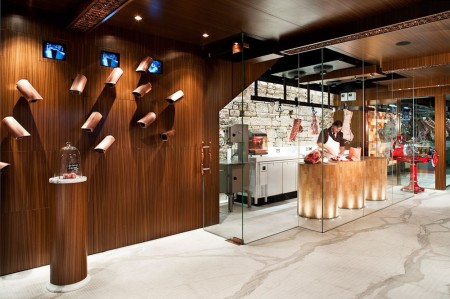
VICTOR CHURCHILL
FINE FAMILY BUTCHER. EST 1876


http://www.victorchurchill.com

http://www.deluxe-lifestyle.ro/articole-imagini/victor-churchill-butcher-una-dintre-cel-2368b.jpg


http://media.sundancechannel.com/UPLOADS/series/man_shops_globe2/500/keiths_picks/msg_travel_guide_australia_location_01.jpg


http://niche-idea-production.s3.amazonaws.com/wp-content/uploads/2010/07/Victor-Churchill-Butcher-1-450x299.jpg


http://farm3.static.flickr.com/2799/4432771059_1d0b3677a7_o.jpg

Week 9


Tim Brown

· What happens when we go from design to design thinking

· Fax machine – challenged to put a cover on a new machine and appeared in a museum

· Focusing on design rather than the product may affect

· Brunei designed the railway and thought of its design very carefully.

· Didn’t just stop with making the best railway but also thought of getting on the train and getting off at New York

· As design came into process it first focused on a smaller canvas and then later on moved onto apparel aesthetic

· Design is now becoming big again

· It’s about understanding culture and complex before you start on your idea

· Watching people closely can help understand people and emotions which then help with your creative innovations

· Instead of thinking what to build, think build to think

· Ask the right questions

http://images.amazon.com/images/P/0061766089.jpg


Cultural Change

Design responses

Understanding culture and context in India lead to low cost manufacture of interlobular lenses for the poor and sight impaired. More meaningless design led the web?

A change from welfare society to a model that reinvent welfare with a club member ship and volunteers participatory systems could become a major them in new design.

The future of design is human centred and the wars participant is the design process even if only the research and development stage.

A participating design solution in Japan called “Cool Bra” to lower carbon footprint of office markers. Designers needed to understand the formal dress code of Japanese office works defined by the culture. Incentive proved by special badge and fashion range. “In times of change” we need new solutions.

Week 8


CREATIVE THINKING


http://www.odu.edu/educ/llschult/blooms_triangle_old.gif

  • We now have a broader definition of Design
  • Including:
  • The shopping “experience” not just the look of the branded environment -> interactive elements (prada n.y) from observing how people behave and asking what they need.
  • Live interaction/dialogue from the consumer -> readout at a museum of consumers responses to displays
  • Rethinking the working environment because people need to feel happy to be productive
  • Celebrating a dwindling resource like water and educating the public abroad the recycling process in an attractive installation
  • Developing systems to assit kenyans to entrepreneurs
  • Heuristic – experienced based; techniques problem solving
  • Changes in technological from 1945 to how have risen exponentially
  • Making our view of the future difficult. CEOs are learning that they cannot do without design and designers are becoming increasingly in and aware of the constraints of business.


http://adabisnis-pns.com/wp-content/uploads/2010/08/creative-thinking.jpg


Design

  • Transforming insights, data
  • Design skills and business are coming together to be successful for the future. Business people will become more like designers…more “masters of heuristics” than “managers of algorithim”
  • Steve Jobs – “Part of my job is to move a good idea around to see what people think and different aspects on different things. There are many options and than eliminate to one thing.
  • Michael Schrage – So why collaboration now? On the one hand, problems, opportunities, and the environments in which they appear are becoming more complex on the other hand, to survive this explosion of complexity, people cultivate specialities.
  • Creative working environment is important to creative people
  • The right mix of process and activities “ to do things differently and to do things different.
  • Design thinking has many attributes – collaborative, holistic, insight, creative, fast, innovative
  • Different types of thinking - abstract, synthesis, immersion, analysis, concrete
  • When you understand the experience it then means you own it
  • Design thinking visualises complex information in a way that can inspire new thought
  • What is tangible(touchable)?
  • What is the “product”?
  • Prototyping utilises story telling, improvisation, sketches, models , illustration environments and animations. They all have a role in conveying their intent.
  • Design thinking embraces many collaborative “technologies”
  • Design thinking creates change.


Innovation can be found at the intersection of an evolving need and a technology

Embracing design thinking will help identify and create an attractive opportunity.

The biggest obsticle is not competition but the way you do things

Drivers of change need a vision and mission, communication, competence, willingness, leadership.

Deep meaning through empathetic research

Design thinking is dialogue that needs to be painted on a canvas

Week 7


http://www.maintainyourchurch.org.uk/Portals/0/Glossary7/Imj907.jpg


Classical architecture comes from the Greek and Roman architecture of classical antiquity which has been practiced in Europe since the Renaissance. It has
inspired many architects today and has led to the neoclassical architecture and the greek revival of the 19th century.


http://www.cabe.org.uk/files/imagecache/csLarge/case-studies/node/6492/edit/grainger-town-008.JPG

Week 6


History Assessment 1


http://filipspagnoli.files.wordpress.com/2008/08/poverty.jpg


What are some of the main social issues that this world faces today? Animal cruelty, obesity or even racism. One main issue that we can face and solve the problem to is; poverty. Why can we? We can deal with it today because we have the

main advantage of money and supplies to help the lives of families in the third world countries. Despite the wealthier parts of the world, over 3 billions people, which makes up almost half of the world live on less the $2.50 a day. Now, 1 in 2 children in the world, which makes it 1 billion children live in poverty, 640 million

live without appropriate shelter, and 400 million

have no access to safe water. Which makes ar

ound

29, 000 children’s death per day and is mainly kids who haven’t reached the age of 5 yet

It is with great difficulty to fix the problems that cause poverty and death but by taking each step with advancing technology and solutions, we can make the world a better place and help solve one of the many social issue

s that are present today. One major step we can take to fix these problems would be the issue of clean water. Clean water is imperative to people all around the world. Sanitation from clean water prevents infectious diseases. Children are more likely to suffer from diarrhoea or some other water related disease, while other people use it for household and human basic needs. Without

clean water, there would be no vegetatio

n or other economical needs.

One country that faces these many problems would be Nigeria. Without the essential needs of clean water and electricity, the country is spiralling downwards.

Animal, human faeces’ and mountains of rubbish are found lying around and have now created a health issue there. Only 62% of the world’s

population are able to gain improved sanitation that ensures hygienic separation of human faeces to human contact.

Many of the septic tanks are close to som

eone’s

room and sewerage, and has no complications going directly into the drainage. Untreated water go into open gutters, while untreated septic tank sludge are dumped into slums channels leading to Lagos lagoon and also to the many towns and slums which have no access to sanitation facilities. Drainage pipes and canals are also used as clean water pipes that enter into the homes of many families.

Olatunbasun Oboyomic, a speaker from Ted.com has seeked and found a solution to solving problems like water, sanitation, energy and education problems in Nigeria through the use of biogas. He wanted to create ways to solve the problem by technologies that are highly adaptable.


What is biogas? Biogas: typically refers to a

gas produced by the biological breakdown of organic matters in the absence of oxygen. Originated from the biogenic material and is a type of biofuel. It is produced from biodegradable materials like manure and sewerage. This creates a type of gas consists mainly of nitrogen, hydrogen and carbon dioxide with traces of methane.

In rural areas, such as Nigeria, energy is at stake and the use of it is increasing. Keeping mind that the demands for energy and oil prices are continuously growing; a better and alternative way to use energy in these third world countries. Biogas has become the solution and is a green alternative energy.

How can biogas, help the problems of poverty, water, sanitation and energy. By using this solution, it turns waste into energy that can be use for sanitation, water and other essential things.

Design has helped by creating biogas plant which would include, stovetop burning biogas, conventional septic tanks which are converted to biogas generation use to avoid polluting the environment and also small laboratory sized plants in schools and to teach children and empower future generations to do the right thing. In schools, students are able to see demonstration on how biogas is burned and used.

Biogas energy can also be used to create electricity and iron factories. Solving the problems of third world countries can be done.

Through these designs created by Olatunbasun Oboyomic, it is possible to have a new and better world in which poverty is not an social issue. Through advancing technology, one day poverty can become extinct.