Wednesday, November 10, 2010

Week 12

FRAUD AND FORGERY WITH CASH AND CHEQUES -

Frank Abagnale

A design innovation today, that has helped in the making of history would be the designs placed on cash and cheques in order to avoid forgery and fraud. By placing watermarks.


http://www.getentrepreneurial.com/images/cash-loan.jpg

History

Frank Abagbale, played a significant role in history, making it harder to use forgery and fraud to get money. In the 1960’s, at the age of 16, Frank Abagnale was able to cheat the cheques system. Frank would gain profit by printing out his account number onto a blank deposit slip and adding them to the real one. By doing so, he was able to collect $40,000 but as soon as the bank was able to tell it was a fake as the cheques kept bouncing, he would soon after change his identity. From identities as a school teacher, to a pediatrician and even a lawyer, Frank would keep changing his identities in order to forge his way around. It took a long time to catch him but after several years, Frank was then hired by the FBI in order to help prevent fraud and theft with cash and cheques. He was able to create special markings such as water marks, which are hidden on cheques and cash which can be revealed through LED lighting. Frank Abagnale became really big in the fraud company. Soon having a film biography on his story called “Catch me if you can” with Leonardo Di Caprio.

Culture

· People are getting smarter on forging. Always finding new ways or loops in creating ways to cheat the cheque system. It is harder to carbon copy them

.

http://thecia.com.au/reviews/c/images/catch-me-if-you-can-poster-1.jpg


Technological changes

· Technology advances so people are able to find their way around and find solutions in fraud and forgery.There are more advanced technologies that are able to find whether cheques and cash are fake or not. Machines and lighting have been created in order to scan and identify whether cash or cheques are real.

Political

· By cheating the system, everyone, including the politicians were affected. Money escaping under their noses. This made them begin to wonder, that if a 16 year old boy was table to cheat the cheque system, other criminals were able to do the same and there would be a greater loss in money.

Social

· Using scam, individuals may loose a large amount of moneys. The largest amount lost to an individual would be $5,000

· Frank Abagnale wasn’t just scamming cheques but also pretended to be of different people, like doctors, lawyers. This shows how cheques and cash could be stolen through fraud and forgery as people may steal the identity of you and be able to take money out in your name.

http://www.chasingthefrog.com/reelfaces/catchmeifyoucan/frank.jpg

Economic

Because of fake cheques and cash being used, people would loose a large sum of money.The economy could loose billions of money due to fraud. People from other countries could steal money and not be caught because of diplomatic immunity or being able to escape to from idenity fraud in another country. In both cases, there would be a great loss in money.

Week 11


Social and Cultural Changes

Luke, Jenica and Kristine

  • · The changes of gender roles – men and women

·http://askmissalpha.com/wp-content/uploads/2010/07/feminism31.jpg
  • Moral changes – same sex marriages, long termrelationships, people choosing to live together and not get married. People are having kids and getting married later in age.
  • · Women are having bigger career due to the cause of feminism.
  • · Other countries adopting lifestyle and culture from other countries. Eg Asia plays a big role in technological changes while Europe has fashion, art etc
  • · America is influencing other countries through shops, music, movies and food


· http://www.ballslist.com/travel/la/hollywood.jpg
  • People are relying more on fast food
  • and creating a lifestyle that is more fast paced. No longer cooking in the kitchen but ordering food.

http://www.fabfoodpix.com/content/fast-food/fast-food-ff001906.jpg
  • Today, lifestyle is more fast paced. Merging technology is advancing very quickly, people prefer electronics to analog.
  • · Music, film and media reflects the changes in society. Comparing the 1800’s to the 60’s, it shows the significant changes to moral beliefs, values and what people do.
  • · We have become more aware of drugs, alcohol and safe sex.
  • · Art has changed to become more contemporary. Andy Warhol – 60’s (pop art) to more installation. Eg Mike Parr

Week 10


Excursion to:

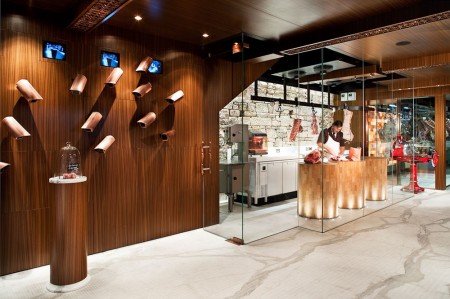
VICTOR CHURCHILL
FINE FAMILY BUTCHER. EST 1876


http://www.victorchurchill.com

http://www.deluxe-lifestyle.ro/articole-imagini/victor-churchill-butcher-una-dintre-cel-2368b.jpg


http://media.sundancechannel.com/UPLOADS/series/man_shops_globe2/500/keiths_picks/msg_travel_guide_australia_location_01.jpg


http://niche-idea-production.s3.amazonaws.com/wp-content/uploads/2010/07/Victor-Churchill-Butcher-1-450x299.jpg


http://farm3.static.flickr.com/2799/4432771059_1d0b3677a7_o.jpg

Week 9


Tim Brown

· What happens when we go from design to design thinking

· Fax machine – challenged to put a cover on a new machine and appeared in a museum

· Focusing on design rather than the product may affect

· Brunei designed the railway and thought of its design very carefully.

· Didn’t just stop with making the best railway but also thought of getting on the train and getting off at New York

· As design came into process it first focused on a smaller canvas and then later on moved onto apparel aesthetic

· Design is now becoming big again

· It’s about understanding culture and complex before you start on your idea

· Watching people closely can help understand people and emotions which then help with your creative innovations

· Instead of thinking what to build, think build to think

· Ask the right questions

http://images.amazon.com/images/P/0061766089.jpg


Cultural Change

Design responses

Understanding culture and context in India lead to low cost manufacture of interlobular lenses for the poor and sight impaired. More meaningless design led the web?

A change from welfare society to a model that reinvent welfare with a club member ship and volunteers participatory systems could become a major them in new design.

The future of design is human centred and the wars participant is the design process even if only the research and development stage.

A participating design solution in Japan called “Cool Bra” to lower carbon footprint of office markers. Designers needed to understand the formal dress code of Japanese office works defined by the culture. Incentive proved by special badge and fashion range. “In times of change” we need new solutions.

Week 8


CREATIVE THINKING


http://www.odu.edu/educ/llschult/blooms_triangle_old.gif

  • We now have a broader definition of Design
  • Including:
  • The shopping “experience” not just the look of the branded environment -> interactive elements (prada n.y) from observing how people behave and asking what they need.
  • Live interaction/dialogue from the consumer -> readout at a museum of consumers responses to displays
  • Rethinking the working environment because people need to feel happy to be productive
  • Celebrating a dwindling resource like water and educating the public abroad the recycling process in an attractive installation
  • Developing systems to assit kenyans to entrepreneurs
  • Heuristic – experienced based; techniques problem solving
  • Changes in technological from 1945 to how have risen exponentially
  • Making our view of the future difficult. CEOs are learning that they cannot do without design and designers are becoming increasingly in and aware of the constraints of business.


http://adabisnis-pns.com/wp-content/uploads/2010/08/creative-thinking.jpg


Design

  • Transforming insights, data
  • Design skills and business are coming together to be successful for the future. Business people will become more like designers…more “masters of heuristics” than “managers of algorithim”
  • Steve Jobs – “Part of my job is to move a good idea around to see what people think and different aspects on different things. There are many options and than eliminate to one thing.
  • Michael Schrage – So why collaboration now? On the one hand, problems, opportunities, and the environments in which they appear are becoming more complex on the other hand, to survive this explosion of complexity, people cultivate specialities.
  • Creative working environment is important to creative people
  • The right mix of process and activities “ to do things differently and to do things different.
  • Design thinking has many attributes – collaborative, holistic, insight, creative, fast, innovative
  • Different types of thinking - abstract, synthesis, immersion, analysis, concrete
  • When you understand the experience it then means you own it
  • Design thinking visualises complex information in a way that can inspire new thought
  • What is tangible(touchable)?
  • What is the “product”?
  • Prototyping utilises story telling, improvisation, sketches, models , illustration environments and animations. They all have a role in conveying their intent.
  • Design thinking embraces many collaborative “technologies”
  • Design thinking creates change.


Innovation can be found at the intersection of an evolving need and a technology

Embracing design thinking will help identify and create an attractive opportunity.

The biggest obsticle is not competition but the way you do things

Drivers of change need a vision and mission, communication, competence, willingness, leadership.

Deep meaning through empathetic research

Design thinking is dialogue that needs to be painted on a canvas

Week 7


http://www.maintainyourchurch.org.uk/Portals/0/Glossary7/Imj907.jpg


Classical architecture comes from the Greek and Roman architecture of classical antiquity which has been practiced in Europe since the Renaissance. It has
inspired many architects today and has led to the neoclassical architecture and the greek revival of the 19th century.


http://www.cabe.org.uk/files/imagecache/csLarge/case-studies/node/6492/edit/grainger-town-008.JPG

Week 6


History Assessment 1


http://filipspagnoli.files.wordpress.com/2008/08/poverty.jpg


What are some of the main social issues that this world faces today? Animal cruelty, obesity or even racism. One main issue that we can face and solve the problem to is; poverty. Why can we? We can deal with it today because we have the

main advantage of money and supplies to help the lives of families in the third world countries. Despite the wealthier parts of the world, over 3 billions people, which makes up almost half of the world live on less the $2.50 a day. Now, 1 in 2 children in the world, which makes it 1 billion children live in poverty, 640 million

live without appropriate shelter, and 400 million

have no access to safe water. Which makes ar

ound

29, 000 children’s death per day and is mainly kids who haven’t reached the age of 5 yet

It is with great difficulty to fix the problems that cause poverty and death but by taking each step with advancing technology and solutions, we can make the world a better place and help solve one of the many social issue

s that are present today. One major step we can take to fix these problems would be the issue of clean water. Clean water is imperative to people all around the world. Sanitation from clean water prevents infectious diseases. Children are more likely to suffer from diarrhoea or some other water related disease, while other people use it for household and human basic needs. Without

clean water, there would be no vegetatio

n or other economical needs.

One country that faces these many problems would be Nigeria. Without the essential needs of clean water and electricity, the country is spiralling downwards.

Animal, human faeces’ and mountains of rubbish are found lying around and have now created a health issue there. Only 62% of the world’s

population are able to gain improved sanitation that ensures hygienic separation of human faeces to human contact.

Many of the septic tanks are close to som

eone’s

room and sewerage, and has no complications going directly into the drainage. Untreated water go into open gutters, while untreated septic tank sludge are dumped into slums channels leading to Lagos lagoon and also to the many towns and slums which have no access to sanitation facilities. Drainage pipes and canals are also used as clean water pipes that enter into the homes of many families.

Olatunbasun Oboyomic, a speaker from Ted.com has seeked and found a solution to solving problems like water, sanitation, energy and education problems in Nigeria through the use of biogas. He wanted to create ways to solve the problem by technologies that are highly adaptable.


What is biogas? Biogas: typically refers to a

gas produced by the biological breakdown of organic matters in the absence of oxygen. Originated from the biogenic material and is a type of biofuel. It is produced from biodegradable materials like manure and sewerage. This creates a type of gas consists mainly of nitrogen, hydrogen and carbon dioxide with traces of methane.

In rural areas, such as Nigeria, energy is at stake and the use of it is increasing. Keeping mind that the demands for energy and oil prices are continuously growing; a better and alternative way to use energy in these third world countries. Biogas has become the solution and is a green alternative energy.

How can biogas, help the problems of poverty, water, sanitation and energy. By using this solution, it turns waste into energy that can be use for sanitation, water and other essential things.

Design has helped by creating biogas plant which would include, stovetop burning biogas, conventional septic tanks which are converted to biogas generation use to avoid polluting the environment and also small laboratory sized plants in schools and to teach children and empower future generations to do the right thing. In schools, students are able to see demonstration on how biogas is burned and used.

Biogas energy can also be used to create electricity and iron factories. Solving the problems of third world countries can be done.

Through these designs created by Olatunbasun Oboyomic, it is possible to have a new and better world in which poverty is not an social issue. Through advancing technology, one day poverty can become extinct.

Week 5


Excursion to the POWER HOUSE MUSEUM

80's

Technology -

Back then, during the 80's, computer games were just coming out so games such as Pacman were very popular. It was consoles verses the Ps. Consumers turned away from arcade video games to games on Pc. Consoles ended around 1983.
Walkmans and casette tapes were used.


http://www.pocketberry.com/wp-content/uploads/2009/08/pacman.gif

Music -
Aboriginal rock - 1980's. Musicians began to express culture through comtemporary rock styles.
eg. Warumpi Band, No Tixed Address
Indigenous and non indigenous entertainers came together to support land rights in the late 80's. 1st new millenium created young
bands everywhere and reflect the 80's pop into strange and compellng shapes. Playing about things that paint the future.

Clothing -
Choices on what you wore were more simpler in the 80's. There was a rise of subcultures with clothing, music and many other things. R
evival of other subcultures like rock, mods and other goths were a complete phenomenom.
Skinheads (shaven/cropped hair) originated in the 60's and through the 70's punk gave subculture a harder working edge. Skins showed lifestyle revolving around drinking, fighting and comradeship.


http://egolesque.com/wp/wp-content/uploads/2009/03/ratt.jpg

Clubbing -
Clubs nowadays are similar to back in the 80's. Strobe lights, this shows they are copying the 80's. Sydney was recognised as the dance capital of the world. Laser lit, smoke floor, DJ, high volumed music.

Condom man -
Condom man was a cartoon advertising safe sex and using condoms. Sydney gay mardigras were a huge event to promote against aids and diseases. So Condom man was introduced. Other safe sex advertisement used to help promote safe sex was the Grim Reaper campaign, safe ball fundraiser and safe sex summer. There were alot of pamphlets, condoms and brochures given out to promote.

Medicare -
Medicare was introduced in the 80's.

Arts and Design -
80's was the decade of excess. Minimalism was out as an irrelvant while colour and form were in. Designers embraced postmodern aesthetics. By the end of the 80's, there was a revolution with collectives and others becoming mainstream.


Week 4

Week 3


Bansky


http://josweb.co.uk/blog/wp-content/uploads/2007/08/1171976416_0dd9a3cc75_o.jpg


http://static3.slamxhype.com/wp-content/uploads/2010/02/banksy_1581514c.jpg

- Banksy is one of the most influential artist of our generation


- Better then Warhol


- Graffiti artist Banksy


- Who he is remains a well guarded identity


- People continue in their search of who he is. His real identity remains a secret and almost a mythology


- Known for his street art


- Known as an anti social graffiti artist


- Van Gogh’s flowers wilted, Monets painting with shopping trolleys under the bridge, Warhols manipulated as well, using Kate Moss’s face instead of Marilyn Monroe


- Even if he doesn’t sign his work you can identify if its is his work


- His works involve stencilling on walls


- He has a big thing with rats in his works. Where he goes, so do the rats


- When he tires of the street his visits museums and zoos and he places some of his works there.


- Not only does his work involves walls but also books, cd covers


- When you look at his works, you can get a sense of who he is.


- The rat use often, symbolises the triumphant of the little people on the street


- Symbols to the authority which is of the policemen


- Some of the police are quite fond of him


- CCT cameras a quite for of him and follows him


- It juxtaposes and shows the revolution of society


- Art and Design as an agent for cultural and political change


- Spanish artist Goya was concerned about mankind and one of his paintings shows of Saturn devouring children


- Goya, “The Third of May”


- Goya, “ The Sleep of Reason”


- Most of his paintings were gruesome and some involved soldeirs and people being hacked to devoured to death.


- Daurnier, “The Third Class Carriage” – political motivation in his paintings


- Picasso, “ Guernica”


- These artworks contribute with whats going in the world


- Picasso’s painting also uses a dove which represent peace


- Banksy followed this by giving the birds flap jackets


- John Heartfield was around during the 2nd World War and talks about the Nazis and the political war. One showing of Hitler and his spine showing


- There was a lot of propaganda


- Photojournalism – The Vietnam war and all the violence , killing and what happened during the war


- Political cartoons are the least agreesive of the form of persuasive arts


- Sometimes they are just neutral in tone and sometimes they are quite savage and nasty


Week 2


Mondrian’s Path to Abstraction


http://meadowbrooktheatre.files.wordpress.com/2010/01/mondrian1.jpg


www.tubafrenzy.org/weblog/archives/PacMondrian.gif

- Mondrian was a very analytical artist. Many of his motives were based on trees, turning them into grids and was very interested in negative space rather than colour. His works are nicely structured and the dark lines break up the colours. His works get more hard edged and contain subdued tones, which makes it seem more black and white. They take your eyes across the canvas so that your eyes move in a a circle. Like Cezanne, he alters the landscape and values unity in his painting at all cost. His next painting have become more simpler through motif, with smaller and smaller negative shapes. They become more monochromatic and the trunks have become the major vertical. Mondrian decided that his paintings should have minimum elements and were 2D, not illusional. Modern art was the beginning of ideas and his works influenced many other artist and designs through his use of horizontal lines and shapes for their buildings. Now all of architecture and furniture look similar to the paintings due to the shapes.


Week 1

http://2.bp.blogspot.com/_PPPu9WFy98/TGA8ipX9VuI/AAAAAAAAAVU/gBuzSq7Cb7g/s1600/ClaudeMonetHaystackEndoftheSummer.jpeg

ABSTRACTION EXHIBITION excursion

Paths to Abstraction 1867-1917 Art Gallery NSW
http://www.artgallery.nsw.gov.au/exhibitions/current/paths_to_abstraction

My chosen artist was Claude Monet, and one of his most well known painting “Haystacks”. French impressionist, Claude Monet played a significant role abstract art. Though “Abstraction” was never a movement, it displayed the evolvement of various artists and their experimentation.

French impressionism came around the 1870’s and was known for the powerful colours and the everyday motifs in which were displayed. It wasn’t until the 19th century, where colour was then thought to be an essential property of an object, like density or melting point.

Monet demonstrated this development and painted outdoors as opposed to the studio environment. Thus “Haystacks” was painted under different light condition at different times of the day. He would rise before dawn , paint the first canvas for half an hour and by then the light would have changed. Then he would switch to the second canvas ad so on. The next day he would repeat this process.

In each painting, the color of the haystack is different because the light shining on the haystack is different. The color of the haystack is determined by the colors the haystack absorbs. The color we see is simply the colorized light that is not absorbed and that is reflected into our eyes.


Week 1

Design Vocabulary

Materiality:Refer to the materials used and seen in the item/artwork under discussion

Monochromatic: Tints or tones of one colour

Symbolic: the use of symbols to convey meaning

Essential property: absolutely necessary, a fundamental or central element to the nature of an artwork

Pictorial space: The illusionary space in a painting/artwork that appears to recede backwards into depth from the picture plane.

Classicism: High regard for classical antiquity, seeks to be formal and restrained (Italian Renaissance).

Irony: one thing being deliberately contrary to another, usually used to emphasis its meaning.

Stylistic revivalism: the revival of a particular style.

Pluralistic society: a society in which two or more states, groups, principles, sources of authority etc... coexist.

Critical theory:the examination and critique of society

Pictorial structure:

Optical colour mixing:two colours placed next to each other, the eye naturally mixes them.

Colour field painting: usually abstract painting, where large fields of flat, solid colour is spread across or stained into the canvas

Action painting:in the moment, impulsive and spontaneous painting - dripped, splashed or smeared. sometimes called 'gestural abstraction'

Prismatic: elongated with parallel sides, like emerald, tourmaline

Orphism: French art movement developed and derived from Cubism, focusing more on the application of colour in painting and influenced by music. An exponent of this movement is Robert Delauney

Synasthesia:together, sensation

Motif: In art, a motif is a repeated idea, pattern, image or theme. Visual motifs are a language to communicate visual ideas.

Woodcut (with regard to Cubism):

Avante Garde: French for “in advance”; term used in all the arts to describe any work, style, or school that is considered in its own time to be radical, consciously breaking from previous tradition.

Signatory: Bond by a signed agreement

Manifesto: gives the means for expression, publication and recordings of ideas of the artist or art group

Non-represenational: art is art which is not based on external appearances; this covers several types of art – abstract, non objective, and decorative; as contrasted with representational art, which is art based on “real”imagery, whether actually existant or existant only in the artists..